UK Vape Tax 2026: Everything You Need to Know About the New Vaping Duty
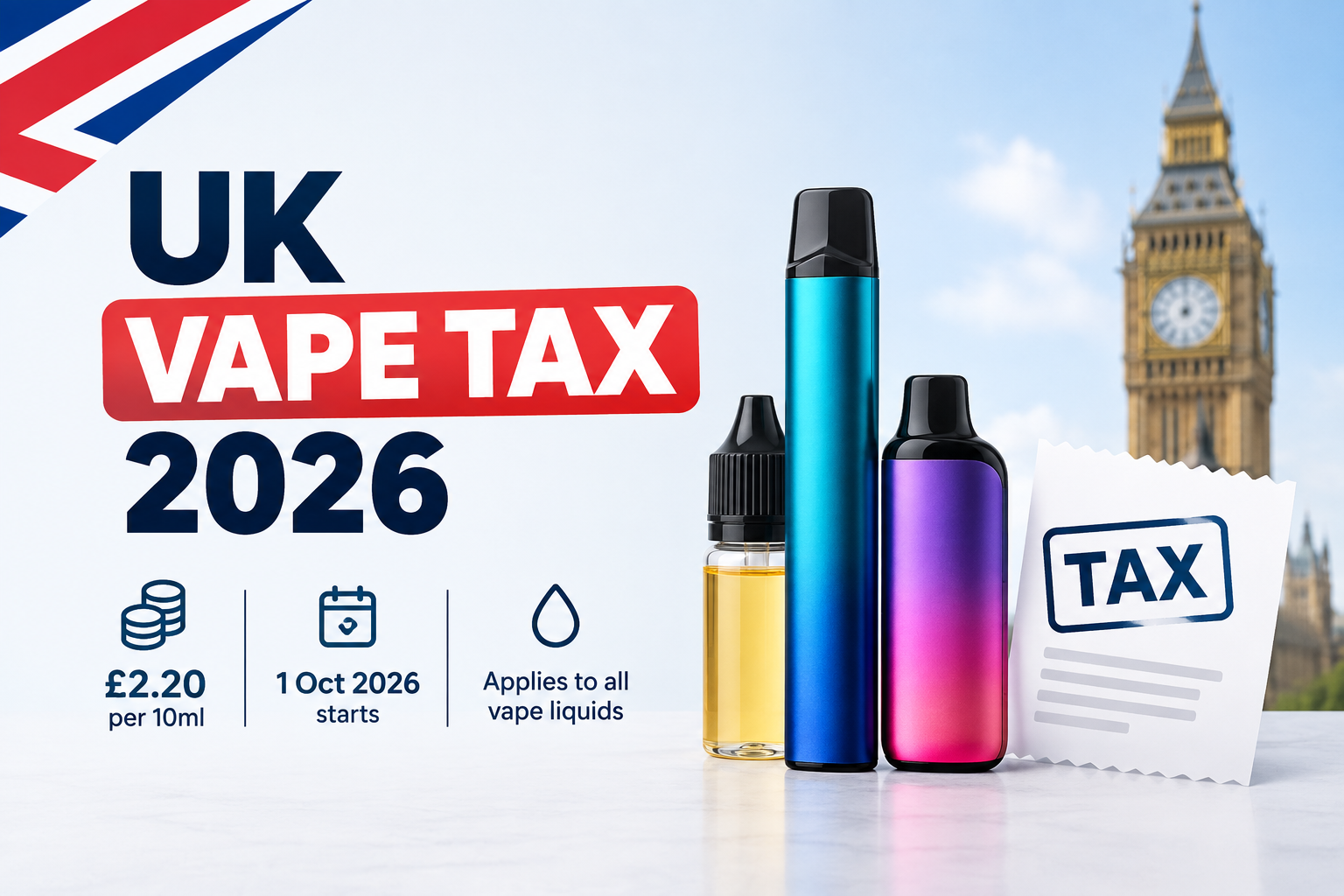
The UK vaping market is facing a major change in 2026 with the introduction of Vaping Products Duty (VPD). The new excise duty will apply to vaping liquid sold in the UK, including products that contain nicotine and those that are nicotine-free.
For vapers, retailers, wholesalers, importers and manufacturers, the new rules will affect product costs, packaging, stock management and compliance.
So, what is the UK vape tax 2026, when does it start, and how much will it add to vape products?
Here is everything you need to know about the new vaping duty UK rules.
What Is the New Vaping Products Duty?
The Vaping Products Duty (VPD) is a new UK excise duty on vaping liquid. It is being introduced by HM Revenue and Customs (HMRC) and is separate from VAT.
The duty is charged according to the volume of vaping liquid in a product rather than simply charging a fixed amount per vape.
The UK vaping duty applies whether or not the liquid contains nicotine. This means nicotine e-liquid, nicotine-free e-liquid, liquids in bottles, cartridges and pods can all fall within the scope of the duty.
The government says the new duty is intended to reduce the affordability and appeal of vaping, particularly among young people and non-smokers, while maintaining a price difference between vaping and tobacco products.
In simple terms, the vaping products duty 2026 is a new tax based on the amount of vaping liquid contained in a product.
When Does the UK Vape Tax Start?
The new duty starts on 1 October 2026.
If you are searching for when does UK vape tax start, the key date to remember is:
1 October 2026
This is when Vaping Products Duty becomes chargeable on liable vaping products released for consumption in the UK.
Businesses that need approval for activities such as manufacturing, storing products under duty suspension or purchasing and applying duty stamps must have the appropriate approval before carrying out those activities. HMRC opened VPD registrations from 1 April 2026.
So, searches such as UK vape tax from October 2026, vape tax from 1 October 2026 and vaping duty from 1 October 2026 all refer to the same major change.
How Much Is the New Vape Duty?
The vaping duty rate is:
£2.20 per 10ml of vaping liquid
That works out at:
£0.22 per 1ml
The rate applies regardless of nicotine content. HMRC confirms that the same flat rate applies to both nicotine and nicotine-free vaping liquid.
For example:
|
Vaping liquid volume |
Vaping Products Duty |
|
1ml |
£0.22 |
|
2ml |
£0.44 |
|
5ml |
£1.10 |
|
10ml |
£2.20 |
|
20ml |
£4.40 |
|
30ml |
£6.60 |
|
50ml |
£11.00 |
|
100ml |
£22.00 |
This means the phrase £2.20 vaping duty per 10ml is the important figure to remember.
It is not £2.20 per vape or £2.20 per bottle. The amount depends on the volume of vaping liquid.
How Is Vaping Duty Calculated?
If you want to know how is vaping duty calculated, the basic calculation is straightforward.
Vaping duty = total vaping liquid volume × £0.22 per ml
For example, a 2ml prefilled pod would have:
2ml × £0.22 = £0.44 duty
A 10ml refill bottle would have:
10ml × £0.22 = £2.20 duty
A product containing 20ml would have:
20ml × £0.22 = £4.40 duty
HMRC's guidance confirms that duty is calculated using the volume of vaping liquid in the product. The amount due on a monthly return is rounded down to the nearest penny.
This also explains why vape duty £2.20 per 10ml is a more accurate way to describe the tax than saying there is a £2.20 charge on every vape.
Does Vape Tax Apply to Nicotine-Free Vape Products?
Yes.
One of the most important points about the new tax is that it is not a nicotine-only tax.
If you are asking does vape tax apply to nicotine free vape, the answer is yes.
The same £2.20 per 10ml rate applies to vaping liquid whether it contains nicotine or not. Therefore, searches such as nicotine-free vape duty, nicotine-free vape tax and does vaping duty apply to nicotine free products all relate to an important part of the new rules.
The duty can apply to vaping liquid in bottles, cartridges and pods, as well as certain substances intended for vaping.
Does Vape Tax Apply to E-Liquid and Vape Pods?
Yes.
The vaping liquid duty is based on the amount of vaping liquid in the product.
This means the new rules can affect:
-
10ml e-liquid bottles
-
Larger refill bottles
-
Prefilled pods
-
Disposable-style devices containing vaping liquid
-
Cartridges
-
Other products containing liable vaping liquid
For example, a 2ml pod represents 44p of Vaping Products Duty at the current rate.
A 10ml bottle represents £2.20 of duty.
So, does vape tax apply to e-liquid? Yes.
And does vape duty apply to vape pods? Yes, where the product contains liable vaping liquid.
How Will Vape Tax Affect Prices?
The biggest consumer question is likely to be: will vape prices increase in 2026 UK?
The answer is that the new duty creates an additional cost that businesses will need to account for. However, the exact retail price increase will depend on how manufacturers, importers, wholesalers and retailers handle the additional cost.
For a 10ml bottle, the direct VPD is £2.20.
VAT continues to apply to vaping products, so the final shelf-price effect can be higher when the duty is passed through the supply chain and VAT is calculated on the resulting selling price.
This means the vape tax price increase will not necessarily be identical across every product.
Factors can include:
-
The amount of liquid in the product
-
Wholesale pricing
-
Retail margins
-
VAT
-
Manufacturer costs
-
Packaging changes
-
Distribution costs
-
Whether the business absorbs some of the duty
Therefore, the cost of vaping after tax will vary between products.
Impact on Disposable Vapes and Prefilled Pods
Disposable-style vapes and prefilled pods are also affected because the duty is based on liquid volume.
A product containing 2ml of vaping liquid has a VPD liability of 44p.
Products with larger liquid volumes will carry a higher duty liability.
This is important because the tax does not simply look at whether a product is called a disposable vape, pod or refill. The amount of vaping liquid is central to the vaping duty calculation.
The new rules may therefore encourage manufacturers to reconsider product sizes, packaging formats and liquid volumes.
Why Are Some Manufacturers Reducing E-Liquid Volumes?
Because Vaping Products Duty is charged by liquid volume, reducing the amount of liquid in a product can reduce the duty liability.
For example, a 10ml product carries £2.20 of VPD, while a 5ml product carries £1.10.
This creates a commercial reason for manufacturers to review product sizes.
However, it is important not to assume that every manufacturer will reduce its e-liquid volume. Product changes will depend on individual brands, product design, customer demand, regulations and commercial decisions.
Consumers may therefore see changes to product sizes, refill formats or packaging as the UK vaping market adjusts to the new duty.
What Happens to Existing Vape Stock?
Existing stock has been given a transition period.
Retailers and wholesalers can continue to sell eligible unstamped vape products that were produced or imported before 1 October 2026 until 31 March 2027.
This gives businesses time to manage older stock already in the supply chain.
From 1 April 2027, all vaping products outside duty suspension must have a valid vaping duty stamp.
This makes stock management particularly important during the transition period.
Retailers should keep evidence showing when unstamped products were produced or imported. HMRC recommends keeping clear records, including supplier details, invoices, delivery notes, product information and relevant dates.
Vape Duty Stamps and Compliance
The vaping duty stamps scheme is another major part of the new system.
From 1 October 2026, liable vaping products manufactured or imported for the UK market generally need a duty stamp before they are released for sale, unless they are moving under duty suspension arrangements.
The UK vape duty stamp is designed to help identify legitimate products and support enforcement against illicit products.
There are transitional arrangements during the introduction of the scheme.
Important Duty Stamp Dates
-
1 September 2026: Digital stamps become available.
-
1 October 2026: Vaping Products Duty and the duty-stamp scheme begin.
-
30 November 2026: Last date to purchase transitional stamps.
-
31 December 2026: Last date transitional stamps can be affixed.
-
1 January 2027: Only digital duty stamps can be affixed.
-
31 March 2027: End of the transition period for eligible existing unstamped stock.
-
1 April 2027: Vaping products outside duty suspension must carry a valid duty stamp.
The digital vaping duty stamp system is intended to provide authentication and traceability through the supply chain.
The stamp is attached to the outermost final retail packaging and must seal the packaging.
What Do Vape Duty Stamps Mean for Retailers?
Retailers do not normally need to apply for VPD or Vaping Duty Stamps Scheme approval if they only buy and sell duty-paid products.
However, retailers still have responsibilities when buying and selling vaping products.
From 1 October 2026, retailers should check that new duty-liable stock has the required stamp.
If a supplier offers unstamped products, the retailer should establish why the stock is allowed to be unstamped and keep appropriate evidence.
HMRC recommends keeping business records for at least six years.
This makes vape tax compliance an important issue for every retailer handling UK vaping products.
What Vape Shops, Wholesalers and Importers Need to Know
The new rules affect different businesses in different ways.
Vape Shops
Vape shops should review their existing stock before 1 October 2026 and make sure new stock supplied after the start date meets the duty and stamping requirements.
Wholesalers
Vape duty for wholesalers is particularly important because wholesalers sit between manufacturers or importers and retailers.
Wholesalers should check supplier records, product stamps, invoices and stock dates.
Importers
Importers may have additional VPD and customs obligations. Vaping products imported into the UK must generally have the correct duty treatment unless they immediately enter duty suspension, such as an approved customs or excise warehouse.
Manufacturers
Manufacturers have more detailed responsibilities around VPD registration, production, duty accounting and stamping.
Businesses carrying out activities that require approval need the appropriate HMRC approval before starting those activities.
Vaping Duty Registration and Payment
Businesses that are liable for VPD need to understand their duty liability, duty points and payment requirements.
The duty point is important because it determines when the duty becomes due.
Products held under duty suspension can have the payment of duty deferred until they leave duty suspension.
Businesses should also maintain suitable records to support their vaping duty payment, calculations and stock movements.
The exact requirements depend on the role of the business and how products are manufactured, imported, stored or supplied.
Expected Changes to Vape Products in the UK
The introduction of VPD could lead to several changes across the UK vaping market.
Consumers may see:
-
Different e-liquid volumes
-
Changes to product sizes
-
Changes to packaging
-
Different refill formats
-
Higher retail prices
-
Greater use of duty-stamped packaging
-
More detailed product information
-
Changes in wholesale pricing
-
More focus on stock and supply-chain compliance
The biggest structural change is that vaping liquid will now carry an excise duty based on volume.
Because the duty is £2.20 per 10ml, businesses have a clear financial reason to review the amount of liquid included in different products.
However, the exact product changes will depend on manufacturers and market demand rather than being automatically required by the tax itself.
What Vapers Need to Know About the UK Vape Tax 2026
For consumers, the main points are simple.
First, the new duty starts on 1 October 2026.
Second, the rate is £2.20 per 10ml, equal to 22p per ml.
Third, the duty applies to both nicotine and nicotine-free vaping liquid.
Fourth, the tax is based on liquid volume, not simply the number of devices.
Fifth, the new duty is separate from VAT.
Finally, duty stamps will become an important way of identifying compliant vaping products in the UK.
UK Vape Tax 2026 Explained: Quick Summary
|
Question |
Answer |
|
What is the new duty called? |
Vaping Products Duty (VPD) |
|
When does it start? |
1 October 2026 |
|
How much is the duty? |
£2.20 per 10ml |
|
Rate per ml |
£0.22 |
|
Does it apply to nicotine-free liquid? |
Yes |
|
Does it apply to e-liquid? |
Yes |
|
Does it apply to pods? |
Yes, where they contain liable vaping liquid |
|
Is VPD the same as VAT? |
No |
|
Are duty stamps required? |
Yes, subject to the transitional and duty-suspension rules |
|
When does the existing unstamped-stock transition end? |
31 March 2027 |
|
When must products outside duty suspension carry stamps? |
1 April 2027 |
Final Thoughts
The UK vape tax 2026 is one of the biggest changes to the UK's vaping market in recent years. The new Vaping Products Duty will introduce a £2.20 charge for every 10ml of liable vaping liquid, regardless of whether the liquid contains nicotine.
For consumers, this could mean higher prices and changes to product sizes. For retailers and wholesalers, the focus will be on compliant stock, supplier checks and accurate records. Manufacturers and importers will face additional requirements around duty, registration and vaping duty stamps.
The key date is 1 October 2026. From then, businesses will need to operate under the new UK vaping duty system, while existing eligible unstamped stock can benefit from the transition period until 31 March 2027.
As the market adjusts, consumers may see changes in e-liquid volumes, packaging, product formats and prices. Keeping up with official HMRC guidance will be important for both businesses and consumers.